What you'll learn
- Medicare Part B helps pay for medically necessary outpatient physical therapy, occupational therapy, and speech-language pathology when a doctor or other provider certifies you need it.
- After the Part B deductible ($283 in 2026), you generally pay 20% of the Medicare-approved amount.
- There's no yearly limit on how much Medicare pays for medically necessary outpatient therapy. Past a set amount ($2,480 in 2026), your therapist confirms the care is still needed.
- Therapy can be covered to improve, maintain, or slow the decline of your function, not only when you're expected to get better.
A hip replacement, a bad fall, a stroke, or years of back pain can all end with the same advice from your doctor: you need therapy. For many older Texans, that means a few months of visits to an outpatient clinic, sometimes a long drive away.
The good news is that Medicare Part B helps pay for it. Here's how coverage works, what you'll pay, and the common myths that keep some people from getting the care they need.
What Part B covers
Medicare Part B helps pay for three kinds of outpatient therapy when they're medically necessary:
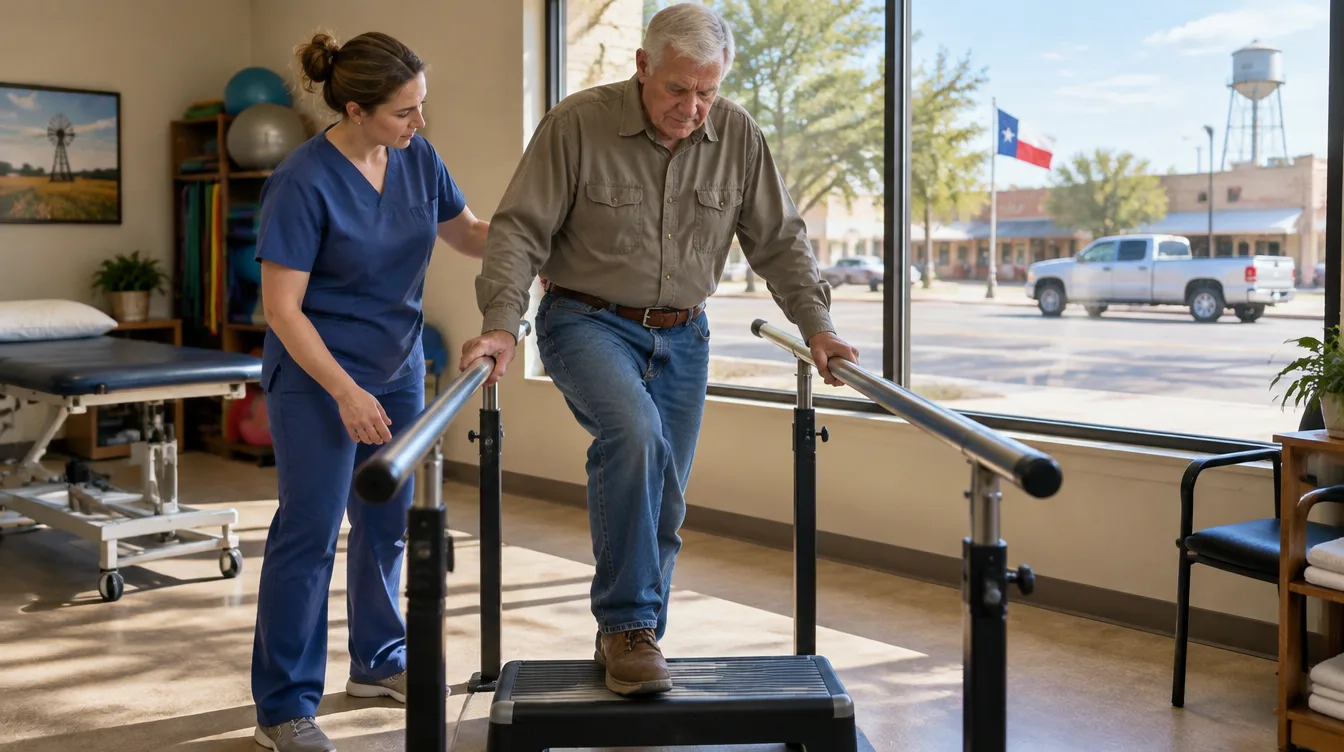
- Physical therapy (PT) helps restore or improve movement after an injury, illness, or surgery. Think walking, balance, strength, and getting up from a chair.
- Occupational therapy (OT) helps you do everyday tasks, like dressing, bathing, cooking, or using your hands after a stroke.
- Speech-language pathology helps with speech, language, and swallowing problems, which can follow a stroke or other illness.
For Part B to cover it, your doctor or another provider, such as a nurse practitioner, clinical nurse specialist, or physician assistant, must certify that you need it.
If you're getting therapy while admitted to a hospital or after a qualifying stay in a skilled nursing facility, that usually falls under Part A instead. Our guide to the 3-day rule for skilled nursing care explains how that works. If you're homebound, therapy at home may be covered under the home health benefit; see how Medicare covers home health care.
What you pay
With Original Medicare, after you meet the Part B deductible ($283 in 2026), you generally pay 20% of the Medicare-approved amount for each visit. Medicare pays the rest when your therapist accepts assignment.
That 20% adds up. If you need two or three visits a week for several months, ask the clinic up front what each visit will cost you. A Medigap policy or other coverage may help pay that share. Our Medigap guide for Texas explains how supplement plans work.
If you're in a Medicare Advantage plan, it must cover what Original Medicare covers, but your copays, therapist network, and rules may differ. Some plans require prior approval for therapy, and HMOs generally require in-network providers. Call your plan before your first visit.
There's no yearly cap
Medicare used to have hard dollar caps on therapy. Those are gone. Medicare.gov says there's no limit on how much Medicare pays for your medically necessary outpatient therapy in a calendar year.
There is a checkpoint, though. Once your therapy costs pass a yearly amount, your provider adds a code to your claims confirming that the care is still medically necessary.
Some claims above a higher amount may get a closer review, but not every one. If your therapist says you need more care, the threshold isn't a reason to stop.
That matters for Texans living with Parkinson's, multiple sclerosis, arthritis, or the after-effects of a stroke, where the goal may be holding steady rather than a full recovery.
Tips for rural Texans
In much of Texas, the nearest outpatient therapy clinic may be in the next county. A few things can help:
- Ask about a clinic closer to home. Your doctor's referral doesn't have to go to the clinic next to the hospital where you had surgery.
- Ask about telehealth. CMS says physical, occupational, and speech therapists can provide some services by telehealth through Dec. 31, 2027. Not every visit works on a screen, but some check-ins may.
- Do your home exercises. Therapists often give you a program to do between visits. It can make each trip count.
- Plan rides early. If you can't drive after surgery, line up help before therapy starts.
Check your bills
Keep a simple log of your therapy dates, then compare it with your Medicare Summary Notice. Our guide to reading your Medicare Summary Notice shows what to look for. If you need a walker, cane, or other equipment as part of your recovery, see how Part B covers durable medical equipment.
Free help
For free, unbiased help with a coverage question or a denied claim, call the Texas Health Information, Counseling and Advocacy Program (HICAP) at 1-800-252-9240. You can also call 1-800-MEDICARE (1-800-633-4227) any time, day or night.
Common questions
Is there a limit on how many physical therapy visits Medicare covers?
Medicare.gov says there's no limit on how much Medicare pays for medically necessary outpatient therapy in a calendar year. Once your therapy costs pass a yearly threshold ($2,480 in 2026 for physical and speech therapy combined, and a separate $2,480 for occupational therapy), your provider must confirm the care is medically necessary for Medicare to keep paying.
Will Medicare stop paying if I'm not improving?
Not just for that reason. Medicare.gov says you can get physical therapy to help improve or maintain your current function, or to slow your rate of decline. The key test is whether you need a therapist's skilled care.
Do I need a referral for physical therapy under Medicare?
With Original Medicare, your doctor or another provider, such as a nurse practitioner or physician assistant, must certify that you need therapy. Medicare Advantage plans may have their own rules, like using in-network therapists or getting prior approval, so check with your plan.
Sources